Want to cover greys, but worried about how your scalp will feel?
You want natural-looking colour, not a cycle of constant touch-ups. At Lavender Hair, we look at your scalp, where your greys come through and your existing colour before discussing what’s realistic. You don’t have to colour on the day.
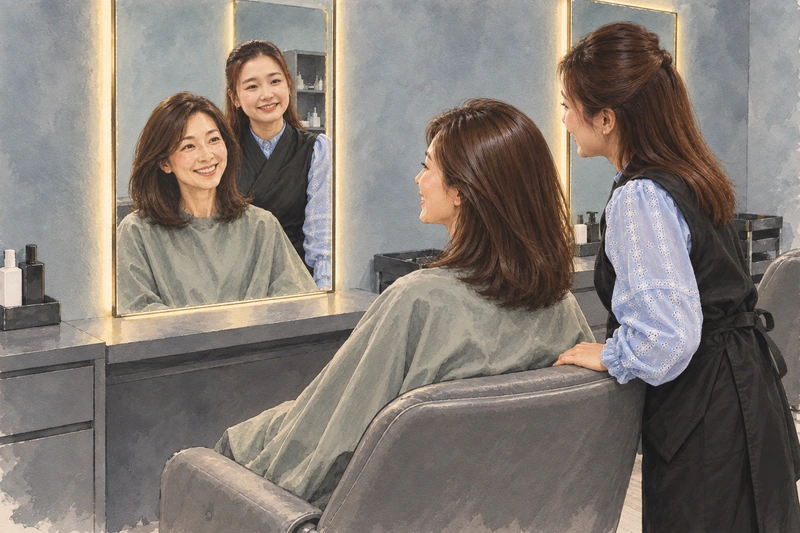
Illustration of a natural-looking colour finish and styling
What matters most to you?
You don’t need to pick a shade before telling us what you want to change.
I want the greys to blend in naturally
If they stand out at the hairline or temples, we can start there and discuss a colour direction that is easier to maintain.
My scalp has felt itchy after colouring
You don’t need to guess which product caused it. Let us know when it started, how long it lasted and what products you used.
I don’t want to re-colour the whole length
New grey growth and previously coloured ends don’t always need the same approach. We consider your existing colour and the condition of your hair.
THE LAVENDER HAIR APPROACH
What happens before, during and after colouring?
01
We listen first, then take a closer look
We look at your scalp, grey distribution and existing colour, ask about previous reactions, and arrange pre-colour skin testing according to the product instructions.
02
We explain what can be achieved
We don’t bleach hair. We discuss natural-looking options based on your starting shade, grey distribution and hair condition, and consider new growth and previously coloured lengths separately.
03
We protect where needed and apply in sections
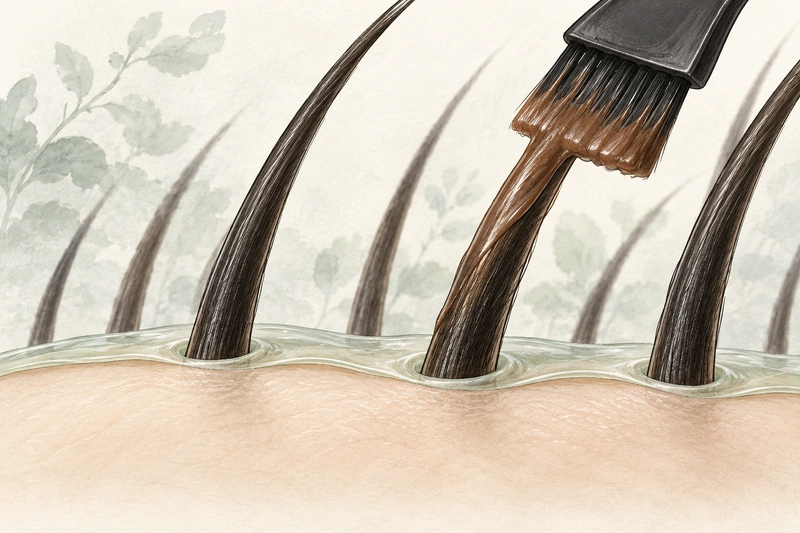
We follow product instructions, use protective scalp serum where appropriate, and manage application and contact time to reduce unnecessary overlap and direct contact. Afterwards, we cleanse the scalp and condition the hair separately.
Illustration of protective scalp serum being appliedIllustration of the scalp barrier and sectioned colour application
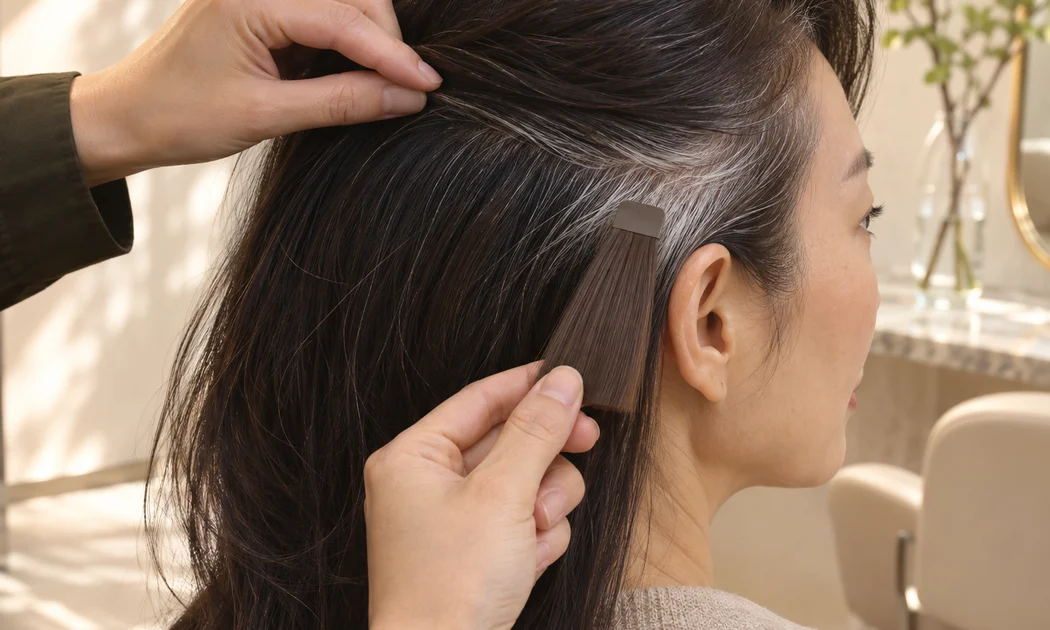
Comparing a swatch with the existing base and grey roots (illustration)
Why might the same reference photo look different on you?
Your starting shade, grey distribution and previously coloured hair affect how a shade takes and fades. Our short lesson uses three primary colours to show why your colourist starts by looking at your hair.
Bring a photo of your hair in everyday light, or tell us how your scalp felt after colouring before. Together we can look at the scalp and hair at 50–200× magnification before you decide whether to book colour.
How does Natural Shine Conditioning Colour care for the scalp?
We begin by assessing the scalp before colouring, add barrier protection and manage dye contact as needed, then cleanse the scalp and provide moisturising hair care afterwards.
What matters when colouring repeatedly?
Consider the scalp condition on the day, previous reactions, product formula, contact time and hair condition after colouring when planning the colour and care steps.