
Can I scrub or squeeze scalp spots away?
Avoid squeezing, scratching the skin open or rubbing the area. Note whether there are more bumps over time or whether you notice them after washing or switching products.
Updated: 2026-10-06
Scalp pimples · Sensitive scalp
If you notice tender bumps, red spots or scalp spots, note where they appear, how long they last, and whether you’ve changed any washing or styling products. This guide explains everyday care and when in-salon scalp care isn’t suitable.
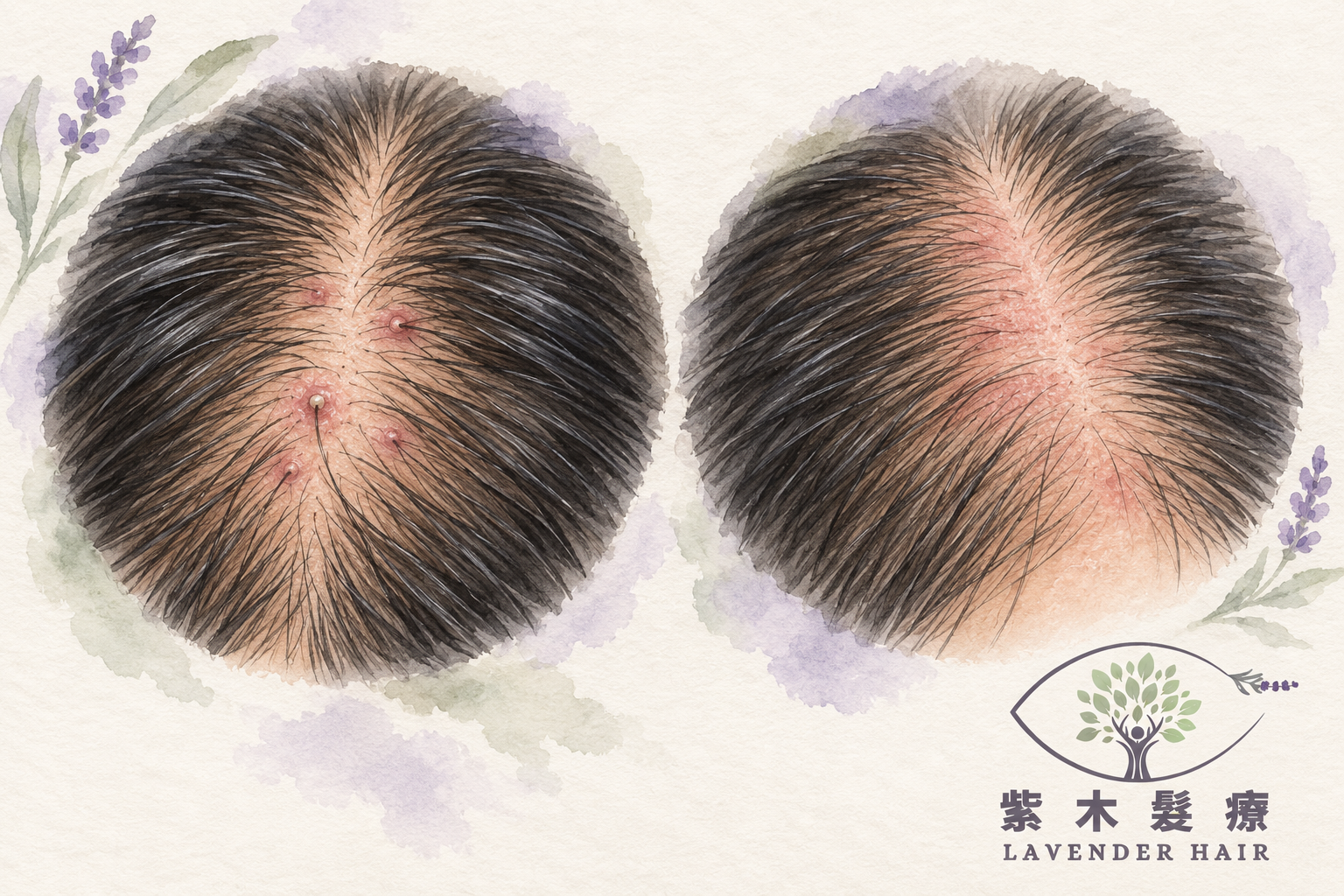
Cleanse gently, rinse styling products thoroughly, wash with your fingertips, clean hats and pillowcases regularly, and pause newly introduced products that may be irritating.
Lavender Hair offers everyday scalp care and guidance on washing routines. We start by looking at the visible scalp surface and discussing your usual routine.
Describe the location, how long it has been present, whether it itches or hurts, and any white pus-filled tips, crusting or oozing. These should not all be treated as simple oiliness. Magnified images alone cannot distinguish every infection, product reaction or skin condition.
Avoid squeezing tender bumps or scraping off crusts. Deep cleansing, massage and in-salon scalp care are not suitable when there is persistent pain, marked redness or swelling, pus, oozing, or broken skin.
Photograph packaging and ingredients, and note whether discomfort followed colouring, a shampoo change or a styling product. Different product reactions and scalp conditions can look similar. The word “sensitive” alone is not enough to choose a treatment.
Tell us about any tender bumps, broken skin, redness, swelling and past reactions before considering an appointment. Natural Shine Colour Care includes a pre-colour check and protective steps, but protection does not mean zero allergy risk, or that colouring an inflamed scalp is suitable.
Prepared by Lavender Hair · Updated: 6 October 2026.
Once the scalp is suitable for everyday care, you can explore cleansing strength and product choices.
Using advanced equipment at 50 to 200 times magnification, we examine the visible condition of your hair, scalp surface and follicular openings, then discuss suitable products or treatments with you.If your needs fall outside our care, we will explain honestly rather than recommend an unsuitable treatment.
Start with the essentials, then explore what they mean for your circumstances.
Avoid squeezing, scratching the skin open or rubbing the area. Note whether there are more bumps over time or whether you notice them after washing or switching products.
Identify possible triggers first, then consider the full formulation and instructions. Do not judge suitability by “natural” or “gentle” labels alone.